Cross Stitch Hoops and Frames: Hoop, Snap Frame or Scroll Frame?
A hoop or frame holds your cross stitch fabric tight while you work. Tight fabric makes it easier to keep your stitches even. The three common choices are a hoop, a snap frame, and a scroll frame. This guide compares them so you can pick the right one for your project.
This article covers the frame you stitch on. To display finished work, see how to frame cross stitch.
Quick comparison
| Hoop | Snap frame | Scroll frame | |
|---|---|---|---|
| How it holds fabric | Between two rings, with a screw | Clamps snap over plastic tubes | Fabric rolls around two rods |
| Creases | Often leaves a ring mark | No hoop-style creases | No hoop-style creases |
| Best for | Small projects and beginners | Small to large projects | Large projects that take months |
| Watch out for | Fabric loosens as you stitch | The thick frame can tire your hand | Takes practice to load straight |
Embroidery hoops
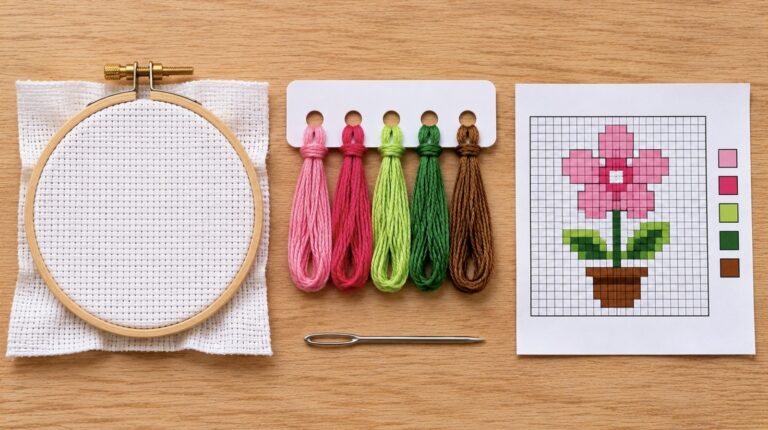
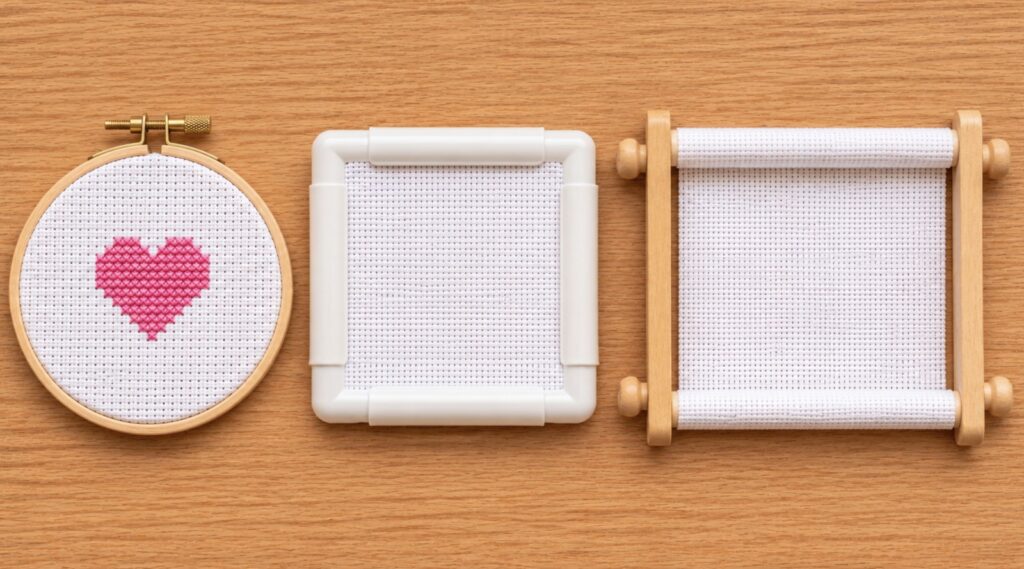
A hoop has two rings. You lay the fabric over the inner ring, press the outer ring on top, and tighten the screw. Hoops are the most common choice. They cost little, weigh little, and come in many sizes, in wood or plastic.
- Good: cheap, light, easy to find, and easy to hold. A wooden hoop can also serve as a frame to display the finished piece.
- Not so good: the fabric loosens as you work, so you tighten the screw again and again. Cheap hoops slip the most. A hoop also tends to leave a ring-shaped crease, which you wash and press out at the end.
A hoop bigger than the whole design avoids creases across your stitches. On a design larger than the hoop, you move the hoop as you go.
Snap frames
A snap frame is a square or rectangle of plastic tubes. You lay the fabric over the tubes and snap a clamp over each side. Q-Snap is the best-known brand, and many stitchers use the name for any frame of this kind.
- Good: the clamps hold the fabric evenly and come off in a second, so you can shift to the next area fast. The frame leaves no hoop-style creases, and it comes apart for storage and travel. You can roll extra fabric and tuck it under a clamp.
- Not so good: the tubes are thick, and some people find them tiring to grip. Cheap copies can hold the fabric less firmly.
Sizes start around 6 by 6 inches and go up to quilt size.
Scroll frames
A scroll frame has two rods joined by two side bars. You attach the top and bottom of the fabric to the rods and roll the extra fabric around them. Only the part you are stitching stays open. As you finish a section, you roll to the next one.
- Good: rolling leaves no hoop-style creases, and the frame handles long pieces well. Many scroll frames fit on a floor or lap stand, which frees both hands.
- Not so good: loading the fabric straight takes practice. Crooked fabric bubbles and loses tension. The two sides that are not on rods can sag, and some stitchers add clips to hold them.
Stitching in hand
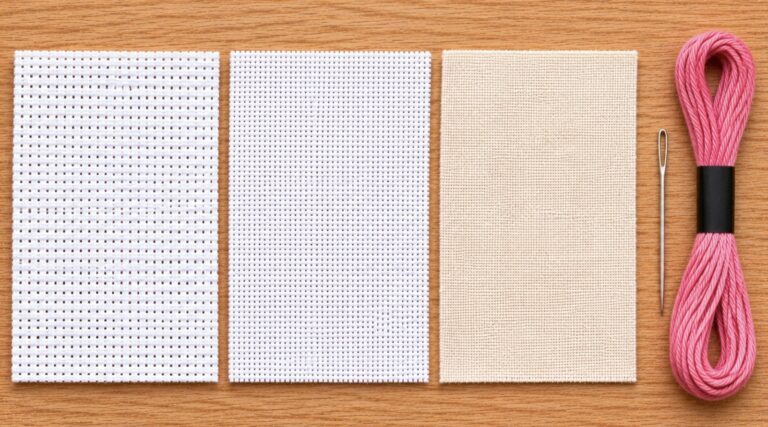
You can also stitch with no hoop or frame at all. It costs nothing and many people find it faster, because the needle goes in and out from the front in one motion. The trade-off is tension: with nothing holding the fabric tight, even stitches take more practice. Stiff Aida makes stitching in hand easier than soft evenweave. See our cross stitch fabric guide.
Which one should you buy?
- First project or a small kit: a wooden or plastic hoop, 5 or 6 inches across. Many beginner kits include one. See cross stitch kits for beginners.
- Medium projects, or you hate hoop marks: a snap frame.
- A large project you will work on for months: a scroll frame, with a stand if you want both hands free.
No option is best for everyone. Comfort decides it. If your hand aches or the fabric keeps slipping, try a different kind.
Tips for any hoop or frame
- Wash your hands before you stitch. The edge of the frame is where fabric picks up dirt.
- Take the fabric out of a hoop when you stop for the day. That keeps the crease from setting.
- Keep the fabric tight but not stretched out of shape. The grid should stay square.
- Leave enough margin. Our fabric calculator adds it for you.