Cross Stitch Thread: Types of Floss and How Many Strands to Use
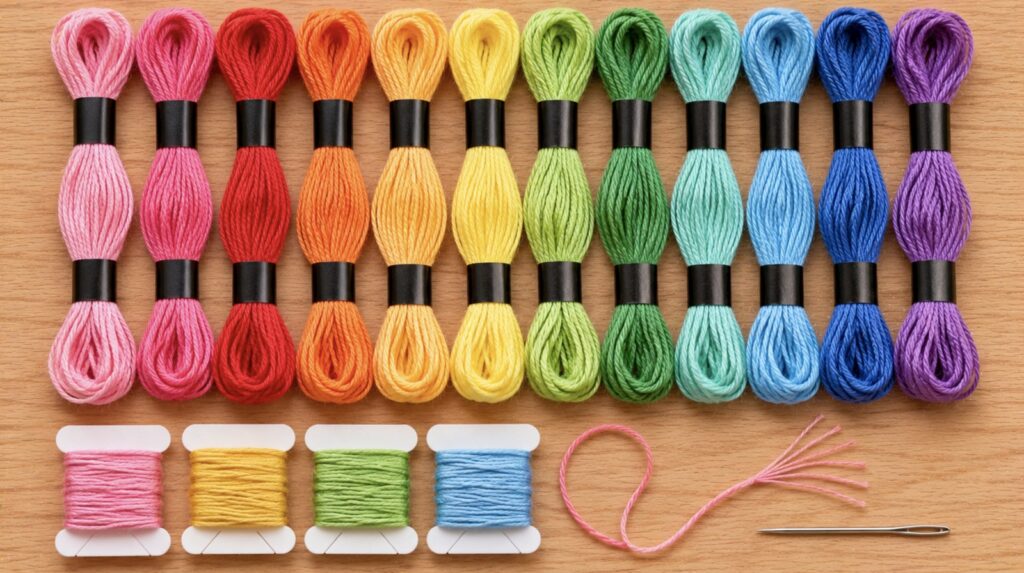
Cross stitch thread is called embroidery floss. The standard kind is six-strand cotton floss: a soft cotton thread made of six thin strands that you can pull apart. You stitch with only some of those strands at a time. This guide explains the types of thread, how many strands to use, and how to handle floss so it does not tangle.
What is six-strand cotton floss?
Six-strand floss is the thread most cross stitch patterns and kits use. Here is what a skein of DMC six-strand floss gives you, as one common example:
- 100% cotton
- Six strands that separate easily
- 8.7 yards (8 meters) per skein
- Mercerized twice for a soft sheen
- About 500 colors
- Dyes made to resist fading and bleeding in the wash
Other brands make six-strand cotton floss too. Each brand numbers its colors in its own way, so use the brand your pattern lists, or use a conversion chart.
How many strands should you use?
The right number depends on your fabric. On 14-count Aida, the most common beginner fabric, use 2 strands for cross stitches and 1 strand for back stitch.
| Stitch | Strands on 14-count Aida |
|---|---|
| Cross stitch | 2 |
| Back stitch outlines | 1 |
| Bolder back stitch | 2 |
On other fabrics, follow your pattern. A pattern or kit tells you how many strands to use.
How to separate the strands
- Cut a length of floss about 12 to 18 inches long.
- Hold the floss near one end and pull out one strand, straight up.
- Pull out each strand you need, one at a time.
- Lay the strands side by side and thread them through the needle together.
Pulling one strand at a time keeps the rest from knotting. It also helps the strands lie flat on the fabric, so your stitches cover better.
Other kinds of thread
Variegated floss
Variegated floss changes color along its length. It gives a shaded effect without changing thread.
Metallic thread
Metallic thread adds sparkle to stars, snow, and trim. It frays and tangles more than cotton, so cut shorter lengths.
Pearl cotton
Pearl cotton is a twisted thread that you do not separate. It comes in several thicknesses and has a rope-like shine.
How to read thread colors on a pattern
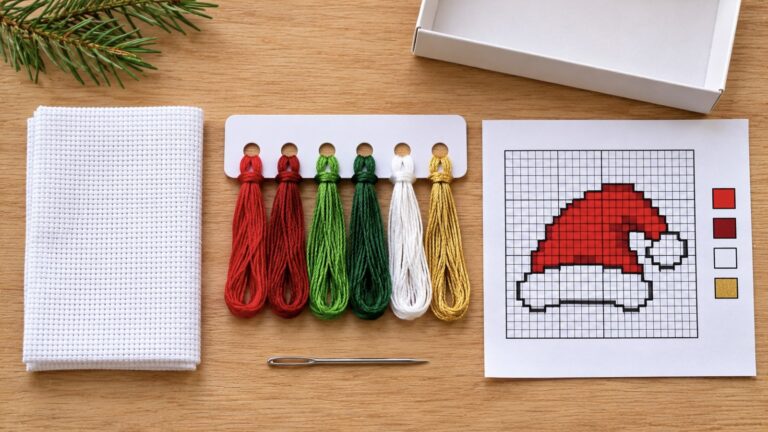
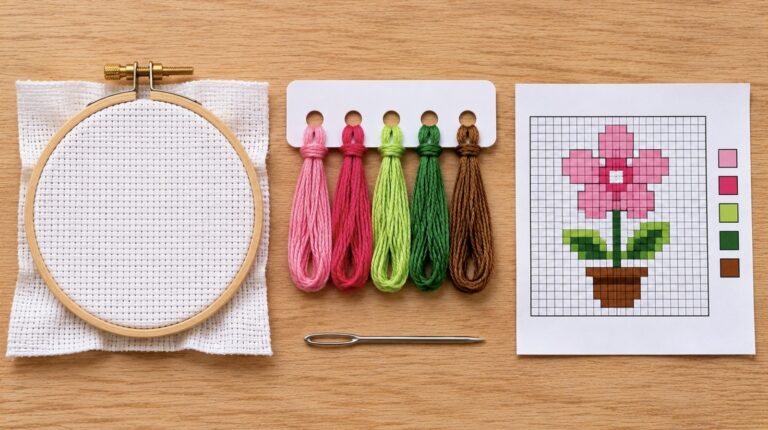
A pattern lists each thread by brand and color number. The chart uses a symbol for each color, and the key matches each symbol to its number. Buy every color on the list before you start, so you do not have to stop in the middle.
How to store floss
- Bobbins. Wind each color on a small card and write the color number on it.
- A box with dividers. Keep the bobbins in number order.
- The original skein. Keep the paper band with the number on it.
Whatever you choose, keep the color number with the thread. Two shades can look the same until you stitch them side by side.
Tips for working with floss
- Keep lengths short. Long thread tangles and wears thin.
- Let the needle hang now and then so the thread untwists.
- Do not carry thread far across the back. It can show through the fabric.
- Keep your hands clean. Floss picks up oils and dirt.
Common questions
Is embroidery floss the same as cross stitch thread?
Yes. Six-strand embroidery floss is the standard thread for cross stitch.
How much floss do I need?
It depends on the design. A pattern lists the colors, and many list how many skeins you need. A kit includes the thread for its design.
What needle works with floss?
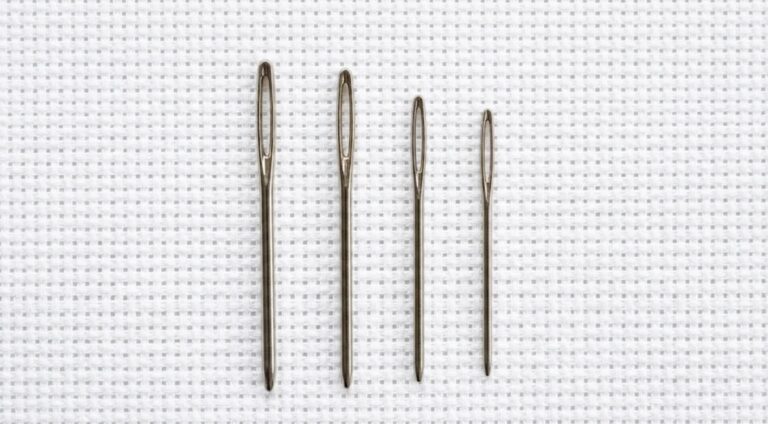
A tapestry needle. See cross stitch needles for the size that fits your fabric.
For the basics, read cross stitch for beginners.