Cross Stitch Needles: Sizes, Types and How to Choose
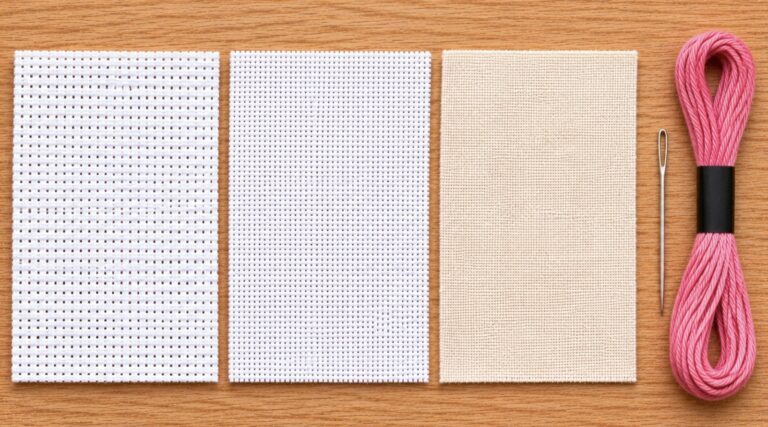
Cross stitch uses a tapestry needle: a needle with a blunt tip and a long eye. The right size depends on your fabric. For 14-count Aida, the most common beginner fabric, use a size 24. This guide covers the sizes, how to match them to fabric, and when a different needle is the better choice.
Why cross stitch needles are blunt
Cross stitch fabric already has holes. A blunt tip slides into the hole instead of piercing the fabric threads, which keeps stitches even and stops you splitting the thread of a stitch you have already made. The long eye makes room for several strands of floss.
Cross stitch needle sizes
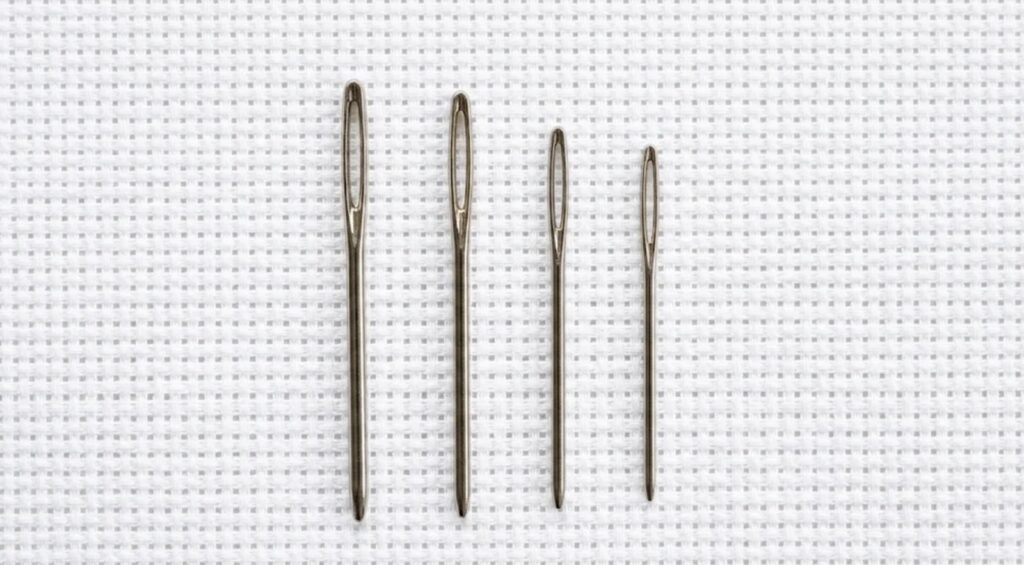
Tapestry needles come in numbered sizes, and the higher the number, the finer the needle. A size 22 is thicker than a size 26.
| Fabric | Needle size |
|---|---|
| 11-count Aida | 22 |
| 14-count Aida | 24 |
| 16-count Aida | 24 or 26 |
| 18-count Aida | 26 |
| 28-count evenweave or linen, stitched over two threads | 24 or 26 |
| 32-count evenweave or linen, stitched over two threads | 26 |
These are the commonly recommended pairings. Brands and personal preference vary a little, so treat the table as a starting point.
How to tell if the size is right
- The needle should pass through the hole with light resistance and without stretching it.
- Too big: the needle forces the holes open and leaves gaps around the stitches.
- Too small: the eye is hard to thread, and the floss rubs and frays as it is pulled through the fabric.
Other needles you may come across
Sharp embroidery needles
A sharp needle is useful when you have to pierce fabric: for stamped cross stitch on regular fabric, for stitching on clothing through waste canvas, and for fractional stitches that go through the center of an Aida square.
Petite tapestry needles
These are shorter versions of the standard sizes. Some stitchers find them easier to handle, and they let you use a little more of each length of thread.
Gold-plated and platinum needles
Plated needles glide smoothly and resist tarnish. They can also help people whose skin reacts to nickel. They cost more and the plating wears off with use.
Beading needles
If a pattern includes seed beads, you need a very fine needle that fits through the bead. For standard seed beads, a size 10 or 12 beading needle works.
How to thread a cross stitch needle
- Cut the floss cleanly and separate the strands you need.
- Fold the end of the floss over the needle and pinch the fold tightly between finger and thumb.
- Slide the needle out and push the pinched fold through the eye.
- A needle threader makes this easier if the eye is small.
Looking after your needles
- Replace a needle when it is bent, rough or tarnished. A damaged needle drags on the fabric.
- Do not leave a needle parked in the fabric for long periods. It can leave a mark.
- Keep needles in a case or on a needle minder so they do not get lost.
Common questions
What size needle do I need for 14-count Aida?
A size 24 tapestry needle.
Can I use a regular sewing needle for cross stitch?
You can, but the sharp tip tends to split the fabric threads and your earlier stitches. A blunt tapestry needle is easier and gives neater results.
How many needles do I need to start?
One is enough. Stores usually sell tapestry needles in small packs, so you get spares.
New to the craft? Start with cross stitch for beginners.