Tent Stitch in Needlepoint: Half Cross, Continental and Basketweave
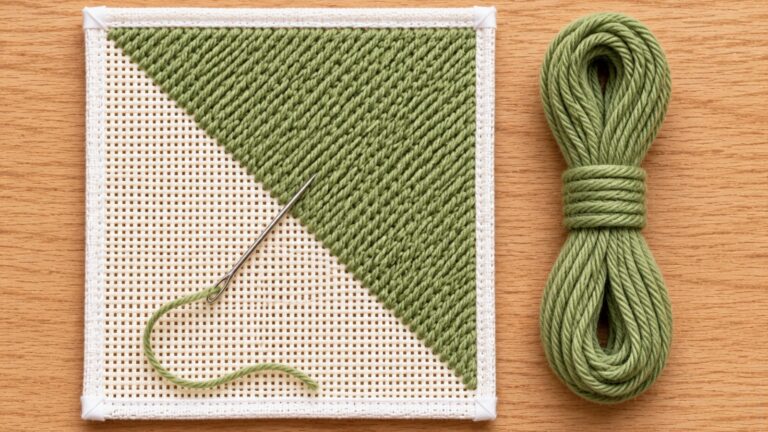
The tent stitch is the basic stitch of needlepoint. It is a small slanted stitch that crosses one intersection of the canvas. You can work it three ways: half cross, continental, and basketweave. All three look the same on the front. They differ on the back, and that changes how much thread you use and how well the piece wears.

How to make one tent stitch
- Bring the needle up through a hole.
- Take it down through the hole one up and one to the right.
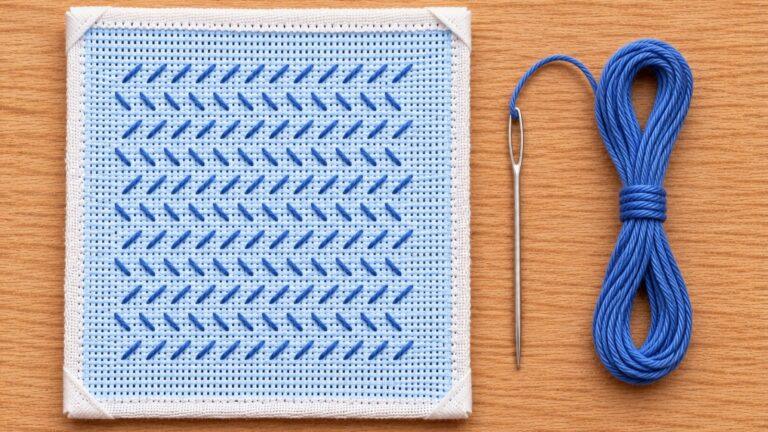
Every tent stitch slants the same way, from lower left to upper right. What changes between the three methods is the order you make the stitches in, and the path the thread takes on the back.
The three tent stitches compared
| Half cross | Continental | Basketweave | |
|---|---|---|---|
| How you work it | In rows | In rows | In diagonal rows |
| Back of the canvas | Short upright stitches | Long slanted stitches | A woven, basket-like pattern |
| Thread used | Least | More | Most |
| Durability | Lowest | Good | Best |
| Canvas distortion | Low | Medium | Very low |
| Good for | Framed pictures and other pieces that get little wear | Small areas, outlines, and beginners | Backgrounds and pieces that get heavy use |
Half cross stitch
The half cross stitch puts very little thread on the back. It uses the least thread, which makes it the cheapest option. It is also the least durable, so save it for framed pictures and decorative pieces.
Continental stitch
The continental stitch leaves long slanted stitches on the back. That extra thread pads the piece and makes it stronger than half cross. It is easy to learn, and it works well for small areas and single rows. It uses more thread than half cross, and it can pull the canvas out of shape over a large area.
For the steps and a diagram, read how to do needlepoint.
Basketweave stitch
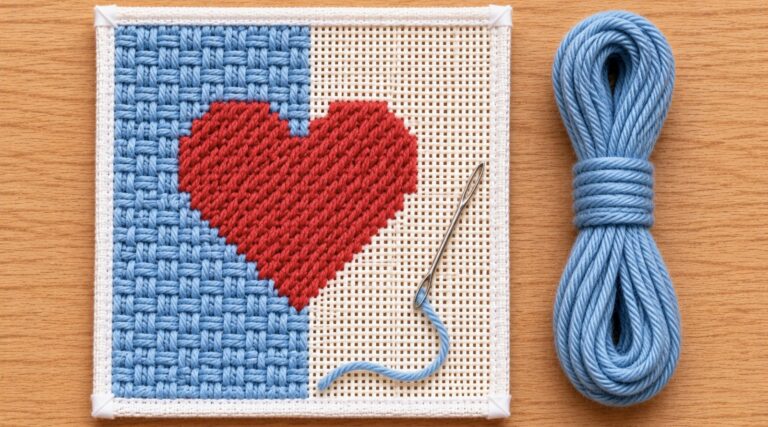
You work basketweave in diagonal rows. The back forms a woven pattern that makes the piece strong and keeps the canvas square. It uses the most thread and takes the most practice.
For the steps and a numbered diagram, read the basketweave stitch guide.
Which tent stitch should you use?
- Learning? Start with continental.
- Filling a background or a large area? Use basketweave.
- Stitching a single line or a tiny area? Use continental.
- Making a pillow, a belt, or a seat cover? Use basketweave where you can, and continental for the small spots.
- Short on thread for a framed piece? Half cross uses the least.
You can mix continental and basketweave in the same piece. They look the same on the front.
Tips for even tent stitches
- Slant every stitch the same way.
- Pull the thread snug, not tight.
- Let the needle hang now and then so the thread untwists.
- Use a frame or stretcher bars on larger pieces to help keep the canvas flat.
Common questions
Is tent stitch the same as continental stitch?
Continental is one way of working the tent stitch. Tent stitch is the name of the stitch itself.
Is tent stitch the same as half a cross stitch?
It looks the same on the front. A tent stitch covers one intersection of needlepoint canvas. See needlepoint vs cross stitch for how the two crafts differ.
What other stitches can I learn?
See the full list of needlepoint stitches.