Needlepoint Background Stitches: 6 Good Choices and How to Pick
Needlepoint background stitches fill the space around the main design. The background is often the largest part of a canvas, so the stitch you choose changes how long the project takes and how the finished piece looks. This guide covers the best background stitches for beginners and how to pick one.
What makes a good background stitch
- It stays quiet. The background should support the design, not compete with it.
- It covers the canvas. Unless you choose an open stitch on purpose, no canvas should show.
- It fits the space. A large pattern needs room. In a tight space around a detailed design, a small stitch works better.
- It suits your patience. Some stitches cover canvas much faster than others.
Background stitches at a glance
| Stitch | Speed | Look | Good for |
|---|---|---|---|
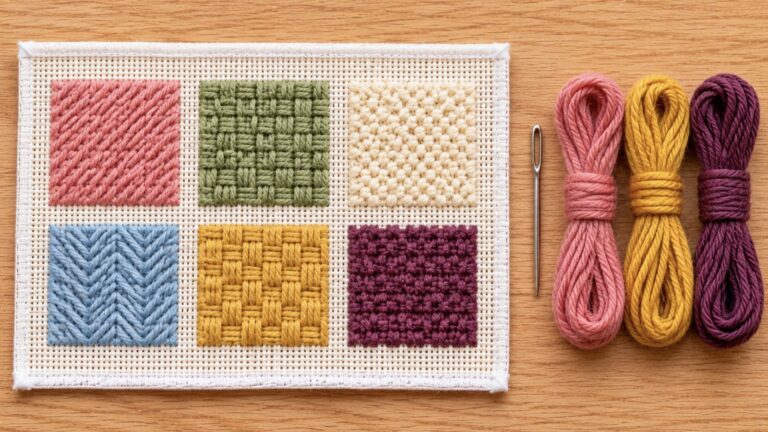
| Basketweave | Slow | Smooth and flat | Any background, and pieces that get heavy use |
| Brick | Quick | Upright stitches stacked like bricks | Skies, hills, simple backgrounds |
| Mosaic | Quick | Tiny slanted boxes | Backgrounds that need a little texture |
| Scotch | Quick | Larger slanted squares | Bold, decorative backgrounds |
| Nobuko | Quick | Rows of short and long slants | Water, snow, sky |
| T stitch | Quickest | Open, with canvas showing | Painted backgrounds you want to show through |
Basketweave
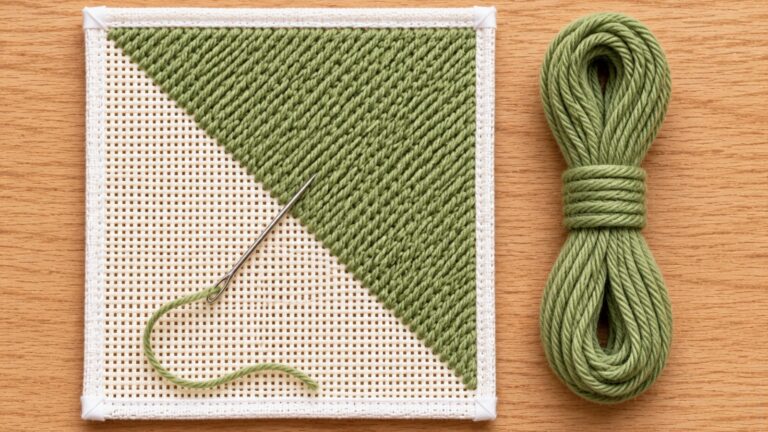
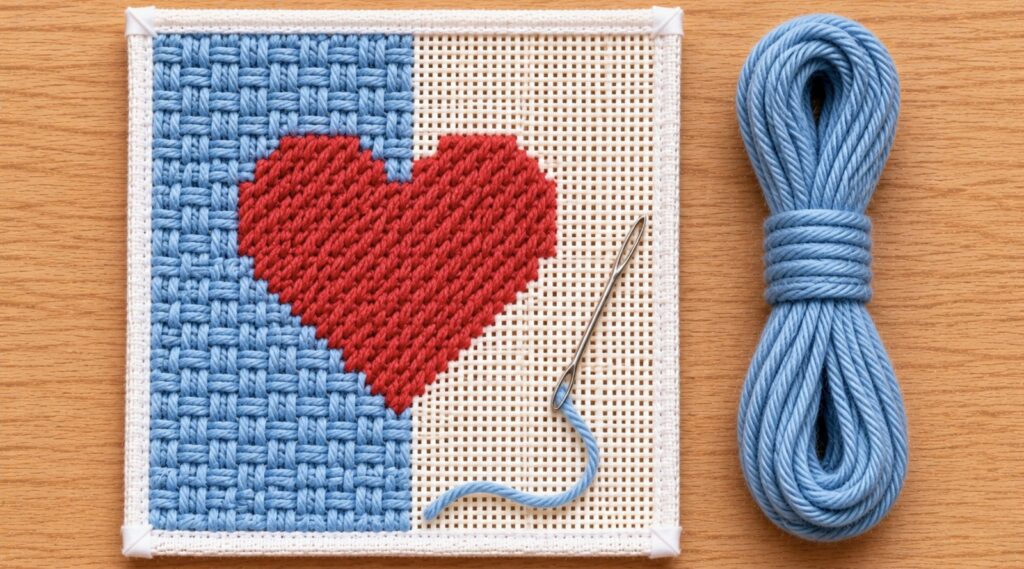
Basketweave is the classic background. It is a way of working the tent stitch in diagonal rows. It gives a smooth surface, keeps the canvas in shape, and wears well. It is also the slowest choice. Learn it in the basketweave stitch guide.
Brick stitch
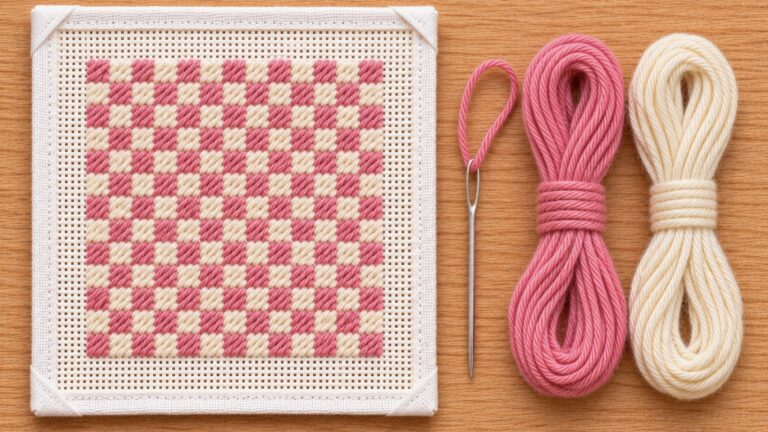
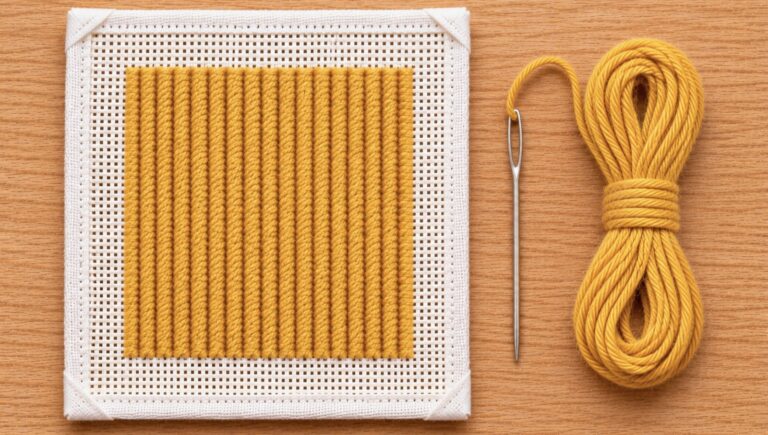
The brick stitch uses upright stitches that each cover two canvas threads. Each column sits one thread off from the next, like bricks in a wall. It is easy to learn and fills space fast.
Mosaic stitch
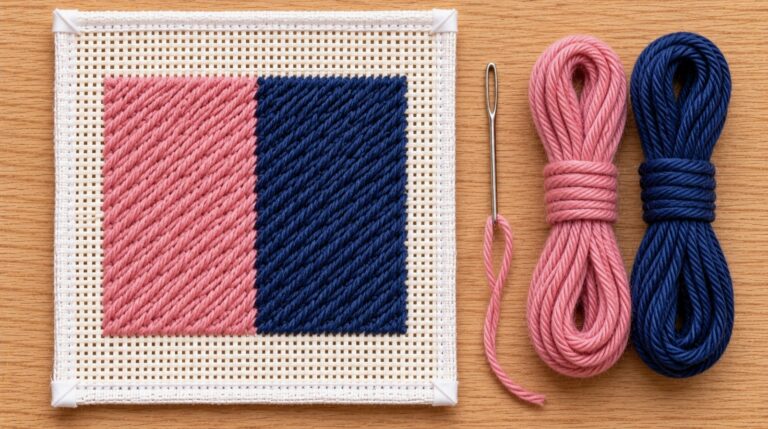
The mosaic stitch makes small boxes from three slanted stitches: short, long, short. Each box covers two canvas threads in each direction. It adds a light texture without drawing attention.
Scotch stitch
The Scotch stitch makes bigger squares. Each square has five slanted stitches that go from short to long and back to short. It is more decorative than mosaic and needs more open space.
Nobuko stitch
The Nobuko stitch alternates a short slanted stitch with a long one along a row. The short stitch crosses one intersection, and the long stitch crosses three. The rows give a soft, moving texture that suits water, snow, and sky.
T stitch
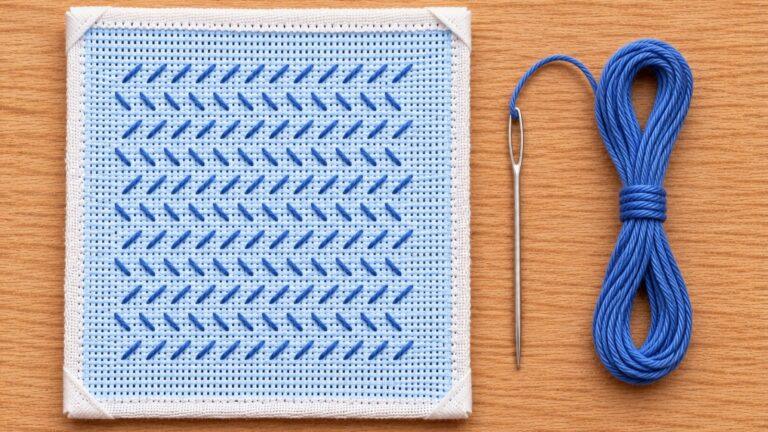
The T stitch places small slanted stitches over every other intersection and leaves the ones between them bare. It is an open stitch, so the canvas shows through. Use it when the background color is already painted on the canvas. It is the fastest of these stitches, and it uses the least thread.
How to choose
- Want the safe choice? Use basketweave.
- Want to finish faster? Use brick, mosaic, or Nobuko.
- Is the design busy and detailed? Keep the background simple: basketweave or brick.
- Is the design simple? A textured background, such as Scotch, adds interest.
- Will the piece get heavy use? Use basketweave. Long stitches can snag.
- Is the background painted in a color you like? An open stitch, such as T stitch, lets it show.
Tips before you start
- Test first. Stitch a small patch in a corner or on scrap canvas to check the look and the coverage.
- Check your thread. A stitch that covers more canvas often needs a thicker thread to hide it.
- Stitch the design first. Then fill the background around it.
- Fill gaps at the edges. Where a pattern meets the design, shorten the stitches to fit the space that is left.
Common questions
What is the fastest needlepoint background stitch?
Open stitches, such as the T stitch, are the fastest, because they skip intersections. Among stitches that cover the canvas fully, brick, mosaic, and Nobuko are all quick.
What is the best background stitch for a beginner?
Basketweave if you want to learn the standard method, or brick if you want something fast and simple.
Where can I see more stitches?
See our guide to needlepoint stitches.