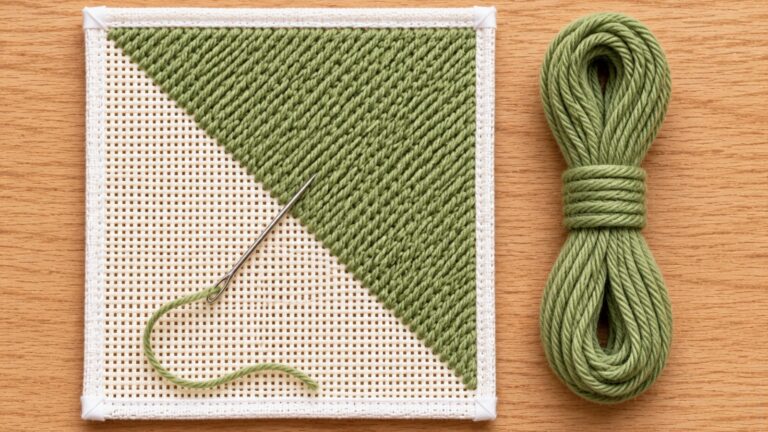
Corduroy Stitch in Needlepoint: How to Stitch the Ridges
The corduroy stitch makes soft ridges that look like corduroy fabric. It uses two simple slanted stitches side by side, and it fills large areas and backgrounds with a striped texture. This guide shows you how it works.
What the corduroy stitch is
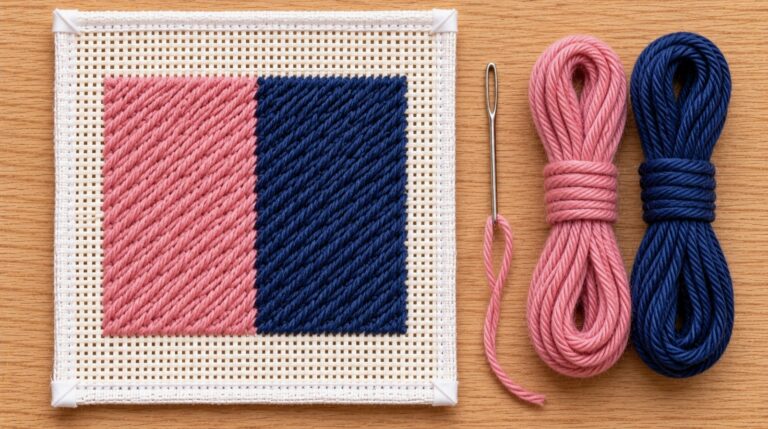
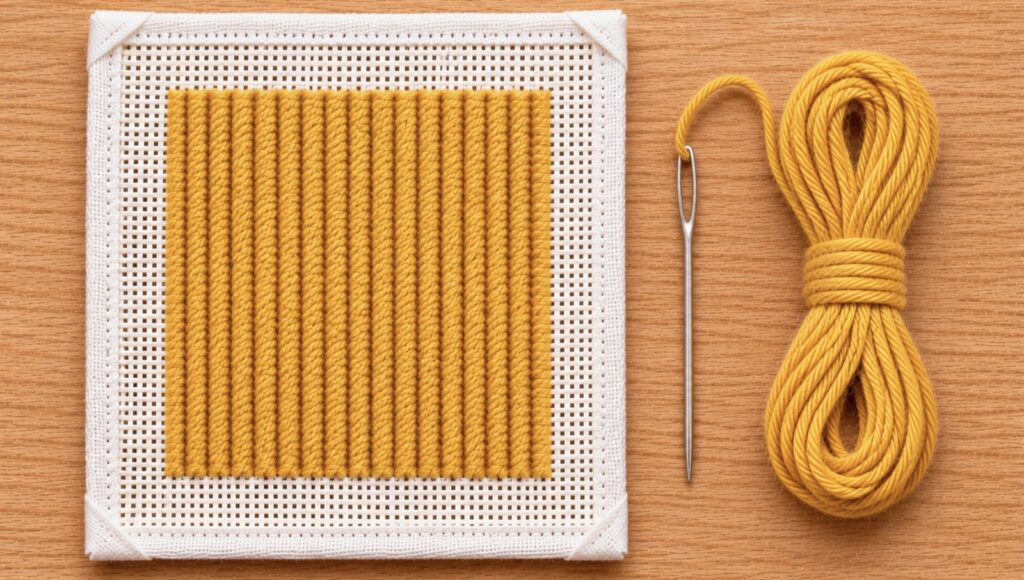
The corduroy stitch alternates two kinds of columns. One column is a line of tent stitches, each over one canvas intersection. The next column is a line of longer slanted stitches, each over two canvas threads. The narrow and wide columns repeat across the area and form the ridges.
How to do the corduroy stitch
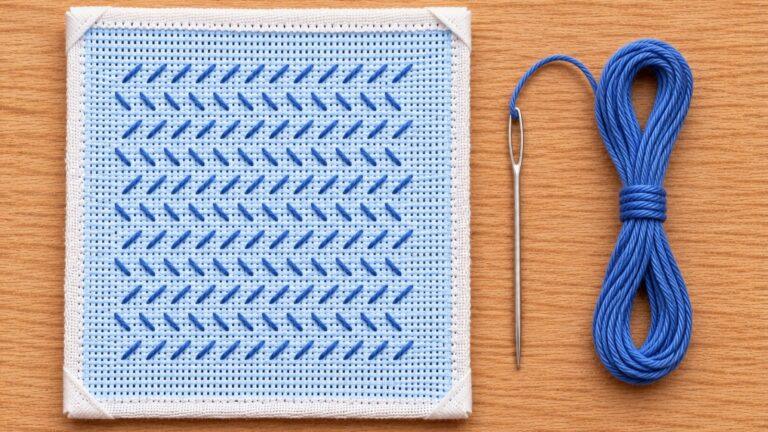
- Stitch the first narrow column. Make a tent stitch that slants up to the right. Make the next one directly below it. Continue to the bottom of the area.
- Stitch the second narrow column. Move three canvas threads to the right. Stitch another column of tent stitches. You now have two narrow columns with a gap two threads wide between them.
- Fill the gap. Make long slanted stitches that go up two threads and right two threads. Stack them from the top of the gap to the bottom.
- Repeat. Keep adding a narrow column and a wide column until you fill the area.
You can also stitch one narrow column, then the wide column beside it, and continue across. Both orders give the same result, so use the one that feels easier.
The horizontal corduroy stitch
Turn the pattern on its side and the ridges run across the canvas. You stitch a row of tent stitches, then a row of longer slanted stitches, and repeat.
Where to use it
- Large areas and backgrounds
- Anything with stripes or ribs, such as clothing, fences, or plowed fields
- Areas where you want texture without a busy pattern
See more options in our guide to needlepoint stitches.
Tips for even ridges
- Count the gap before you fill it. It must be exactly two threads wide.
- Slant every stitch the same way, up to the right.
- Fill partial columns at the edge of a shape with tent stitches.
- Test your thread on the margin of the canvas first. The long stitches need a thread thick enough to cover the canvas.