Needlepoint Stitches: A Beginner’s Guide to the Main Types
Needlepoint stitches are the different ways you can lay thread across the canvas. One stitch, the tent stitch, does most of the work. Dozens of decorative stitches add texture when you want it. This page explains the main families of needlepoint stitches and links to a step-by-step guide for each one we cover.

Start with the tent stitch
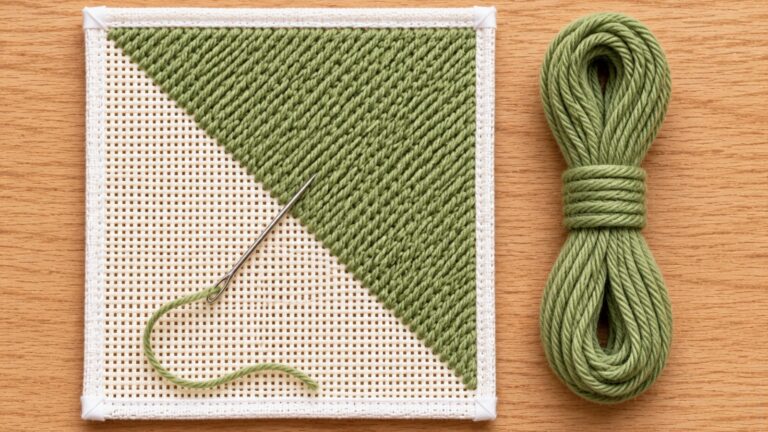
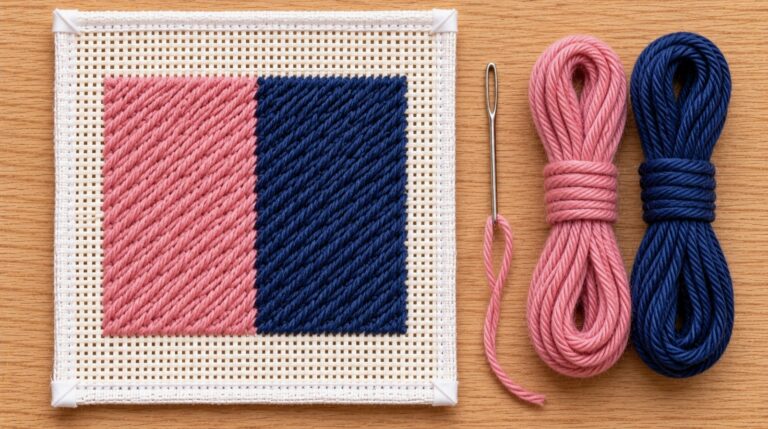
The tent stitch is a small slanted stitch that crosses one intersection of the canvas. Most needlepoint designs use it for all or nearly all of the canvas. If you learn one stitch, learn this one.
You can work the tent stitch three ways. They look the same on the front and differ on the back:
- Continental works in rows across the canvas.
- Basketweave works in diagonal rows and keeps the canvas in shape.
- Half cross uses the least thread and is the least durable.
Read the tent stitch guide to compare all three, then learn the basketweave stitch for large areas.
The main families of needlepoint stitches
| Family | How the stitches lie | Examples |
|---|---|---|
| Tent stitches | Small slants over one intersection | Continental, basketweave, half cross |
| Box stitches | Slanted stitches of different lengths that form squares | Mosaic, Scotch |
| Straight stitches | Upright or sideways stitches over two or more threads | Brick |
| Mixed-length slanted stitches | Short and long slants in rows | Nobuko |
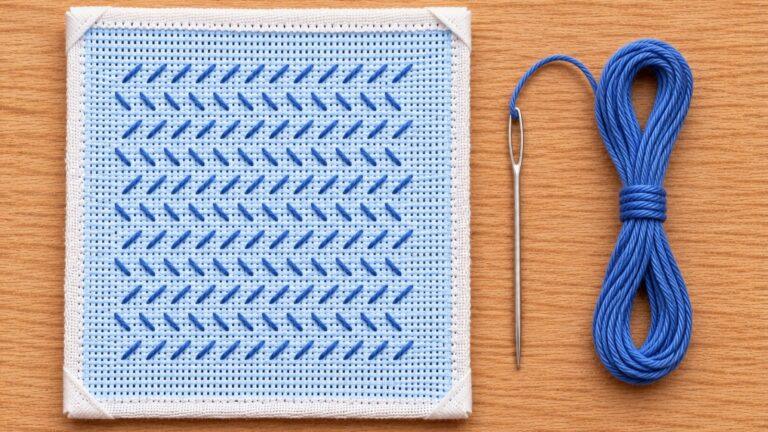
| Open stitches | Stitches that skip intersections and let the canvas show | T stitch, skip tent |
Three decorative stitches to try first
Mosaic stitch
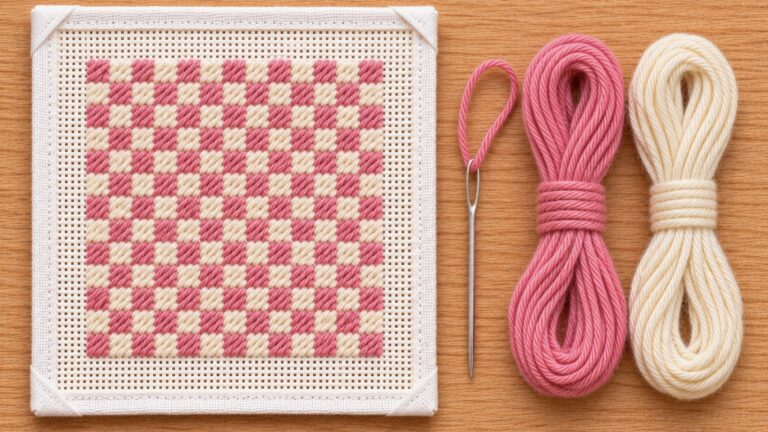
The mosaic stitch makes a tiny box from three slanted stitches: a short one, a long one, and a short one. Each box covers two canvas threads in each direction. It is the smallest box stitch and one of the easiest decorative stitches to learn.
Scotch stitch
The Scotch stitch is the larger relative of the mosaic stitch. Each box has five slanted stitches that go from short to long and back to short.
Brick stitch
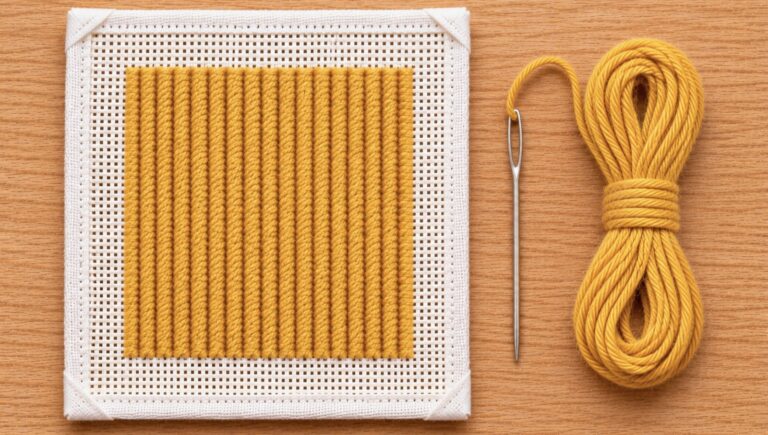
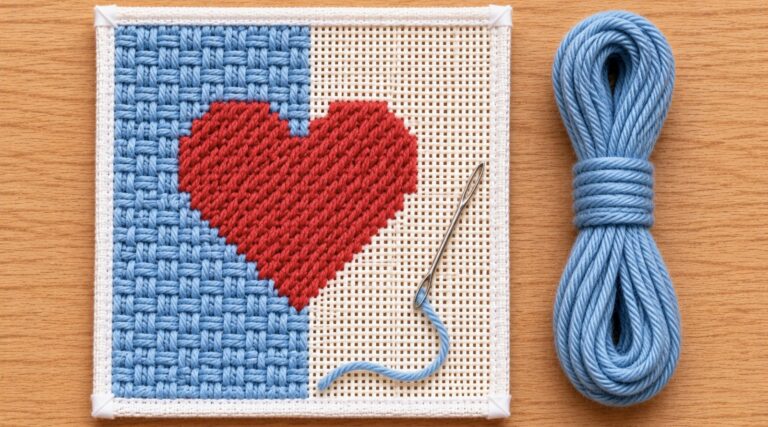
The brick stitch uses upright stitches that each cover two canvas threads. Each column sits one thread lower or higher than the one beside it, so the stitches stack like bricks. It covers canvas fast.
All three work well for backgrounds. See needlepoint background stitches for how to choose one.
How to choose a stitch
- For the design itself, use tent stitch. It shows detail best.
- For large solid areas, use basketweave or a decorative background stitch.
- For texture, such as water, sky, or clothing, try a decorative stitch that suggests it.
- For your first project, use tent stitch for everything. Add one new stitch on your second project.
Tips for learning a new stitch
- Practice on a scrap of canvas first.
- Count the canvas threads, not the holes.
- Keep an even tension so the stitches lie flat.
- Use a thread thick enough to cover the canvas. Longer stitches often need a thicker thread.
Common questions
How many needlepoint stitches are there?
There are hundreds. You only need the tent stitch to finish a project.
What is the most common needlepoint stitch?
The tent stitch.
What is the easiest needlepoint stitch for a beginner?
The continental tent stitch. Follow the steps in how to do needlepoint.