Needlepoint vs Cross Stitch: What Is the Difference?
You work both needlepoint and cross stitch on a grid with a blunt needle, so people often mix them up. The short answer: needlepoint covers a stiff canvas completely with slanted stitches, while cross stitch makes X-shaped stitches on a soft fabric and usually leaves the background showing. The canvas, thread, cost and finishing are all different too.
This guide explains each difference in simple language so you can decide which one to try first.
Needlepoint vs cross stitch at a glance
| Needlepoint | Cross stitch | |
|---|---|---|
| Worked on | Stiff, open-weave canvas | Soft, even fabric such as Aida or linen |
| Basic stitch | Tent stitch (one slanted stitch per square) | Cross stitch (an X over each square) |
| Coverage | You stitch the whole canvas | Usually only the design; the fabric shows around it |
| Thread | Wool, cotton, silk or blends, fairly thick | Stranded cotton floss, usually 2 strands |
| How you follow the design | Often painted or printed on the canvas | Usually counted from a chart |
| Typical uses | Pillows, belts, ornaments, key fobs, wall pieces | Framed pictures, samplers, cards, bookmarks, ornaments |
| Cost to start | Usually higher | Usually lower |
What is needlepoint?
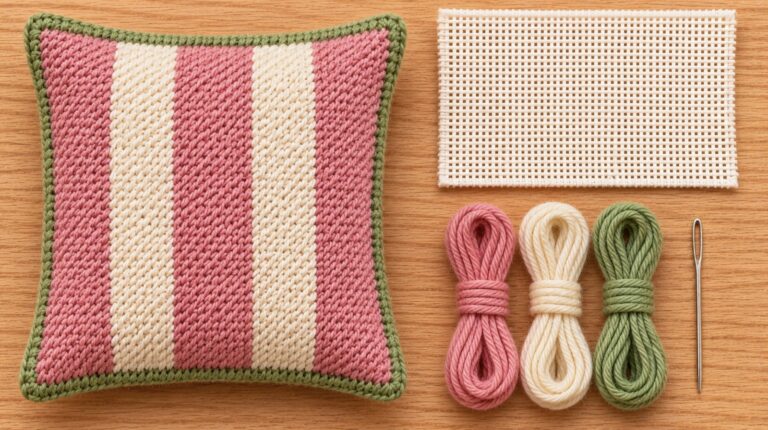
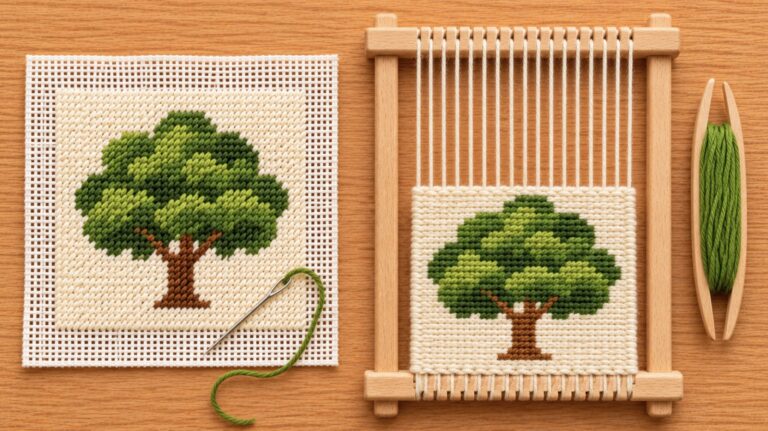
Needlepoint is stitched on a stiff canvas with evenly spaced holes. The size of the canvas is called its mesh: the number of holes per inch. 13 mesh and 18 mesh are common sizes; a lower number means bigger holes and bigger stitches.
The basic needlepoint stitch is the tent stitch, a small slanted stitch that crosses one intersection of the canvas. Continental and basketweave are two ways of working tent stitch. There are also many decorative stitches that cover several canvas threads at once.
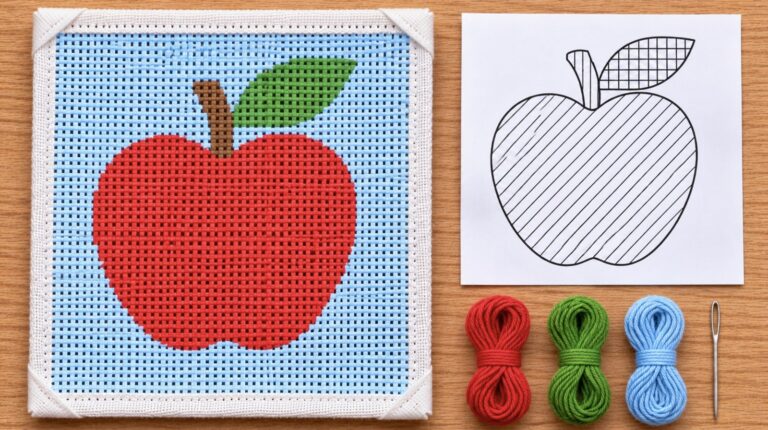
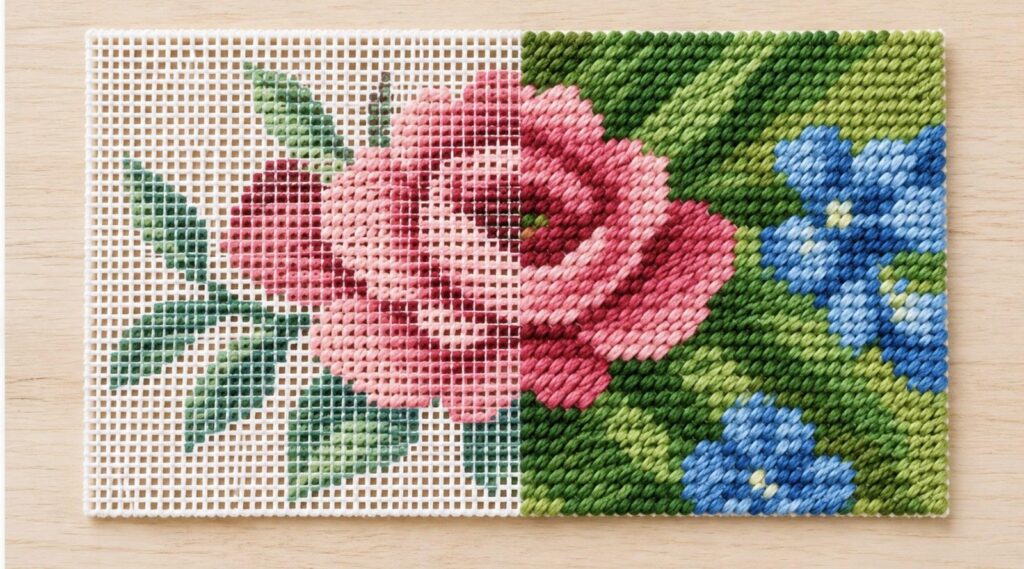
In most needlepoint, the design is already on the canvas, painted or printed, so you stitch each area in the color you see. The finished piece is thick and hard-wearing because stitches cover every part of the canvas.
What is cross stitch?
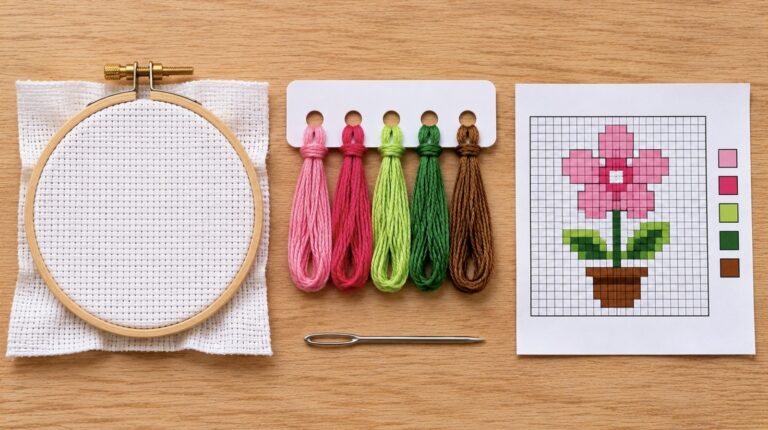
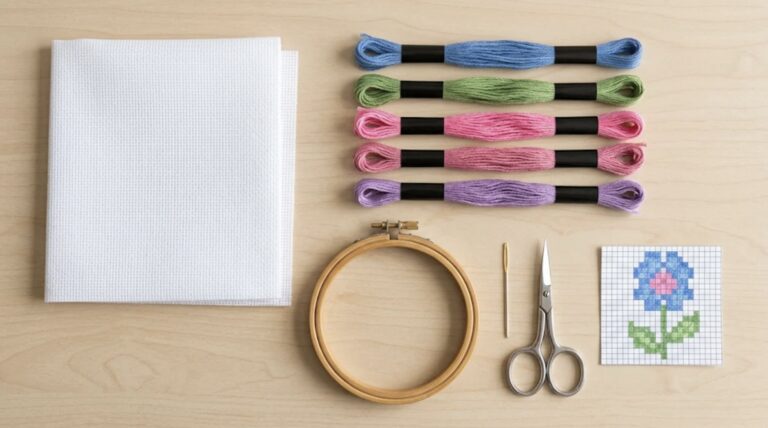
You work cross stitch on a soft fabric woven in a regular grid. The most common beginner fabric is Aida, which has clear holes at the corners of each square. The count tells you the fabric size: 14-count Aida has 14 squares per inch.
Each stitch is an X made from two diagonal stitches that cross in the middle of a square. In counted cross stitch you follow a printed chart, counting squares to place each X. Stamped (printed) cross stitch has the design marked on the fabric instead.
The Xs build the design like pixels in a picture, and you usually leave the fabric around it bare.

The main differences
1. Canvas vs fabric
Needlepoint canvas is stiff and holds its shape. Cross stitch fabric is soft, so many stitchers hold it taut in a hoop or frame while they work. You cannot swap them freely: needlepoint thread is too thick for most cross stitch fabric, and cross stitch floss looks thin and gappy on needlepoint canvas unless you use many strands.
2. The stitches
A needlepoint tent stitch is a single slanted stitch. A cross stitch is two slanted stitches that cross. That is why half of a cross stitch looks like a tent stitch, and why people confuse the two crafts.
3. Thread
Cross stitch almost always uses six-strand cotton floss, separated so that you stitch with one to three strands. Needlepoint uses a wider range of threads, including wool, pearl cotton and silk, chosen to cover the canvas fully.
4. Following the design
With a painted needlepoint canvas there is no counting: the colors are in front of you. Counted cross stitch needs more attention, because one miscounted square can shift part of the design.
5. Cost
Cross stitch is usually the cheaper craft to start. Fabric, floss and a needle cost little, and many patterns are inexpensive. Needlepoint canvases, especially hand-painted ones, cost more, and you need more thread to cover the whole canvas.
6. Finishing
Most stitchers wash, press and frame a finished cross stitch. Needlepoint often needs blocking, which means stretching the canvas back into shape. After that, you or a finisher make it into an item such as a pillow or ornament. Many stitchers pay a finishing service for that step.
Which is easier for beginners?
Both are beginner-friendly, and each is easier in a different way.
- Needlepoint is easier to follow if you use a painted canvas, because you do not need to count.
- Cross stitch is easier to afford, and most craft stores sell the supplies.
- The stitch size is about the same on common beginner materials: 13 mesh canvas has 13 stitches per inch, and 14-count Aida has 14.
- Cross stitch often takes fewer stitches, because the background usually stays bare. That can mean a quicker first finish.
Which should you choose?
- Choose needlepoint if you want a sturdy finished item, prefer a painted design with no counting, and do not mind spending more.
- Choose cross stitch if you want a low-cost start, enjoy following a chart, and like framed pictures or small gifts.
Many stitchers do both. The skills carry over: holding the needle, keeping an even tension and reading a grid are the same in each craft.
Common questions
Can you use a cross stitch pattern for needlepoint?
Yes. A cross stitch chart is a grid of colored squares, and you can stitch each square as a tent stitch on needlepoint canvas. The finished size will change with the canvas mesh, and you will need to fill in the background.
Do needlepoint and cross stitch use the same needle?
Both use a tapestry needle, which has a blunt tip and a long eye. The size differs: needlepoint needles are generally larger because the thread is thicker and the canvas holes are bigger.
Is needlepoint the same as embroidery?
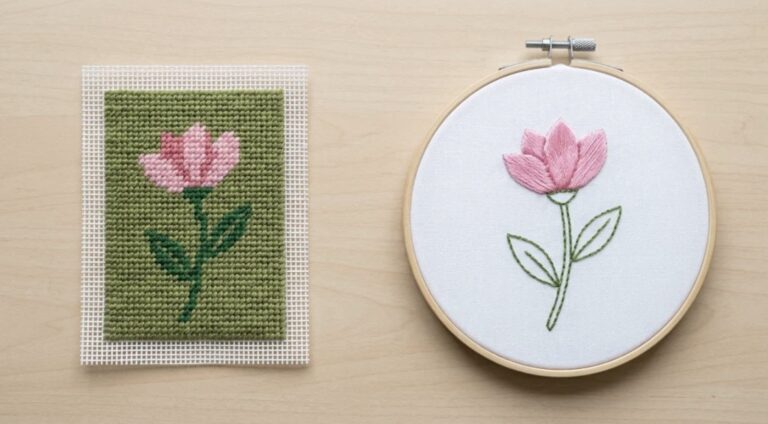
Needlepoint and cross stitch are both types of embroidery. In everyday use, “embroidery” usually means free-style surface embroidery worked on regular fabric without following a grid.
Ready to start? Read how to do needlepoint or cross stitch for beginners.