Needlepoint Tools and Accessories You Actually Need
You need only two tools to start needlepoint: a tapestry needle and a small pair of sharp scissors. Everything else makes the work easier, neater, or more comfortable. This guide sorts needlepoint tools and accessories into what you need now, what helps soon, and what can wait.
The short list
| Tool | What it does | When to buy it |
|---|---|---|
| Tapestry needles | Carry the thread through the canvas | Now |
| Small sharp scissors | Cut thread cleanly | Now |
| Stretcher bars and tacks | Hold the canvas tight and square | With your first larger project |
| Needle minder | Holds your needle on the canvas | Soon |
| Needle threader | Pulls thread through the needle eye | Soon, if threading frustrates you |
| Laying tool | Keeps flat and stranded threads smooth | When you try decorative threads |
| Light, notebook, project bag | Comfort and order | When you want them |
What you need from day one
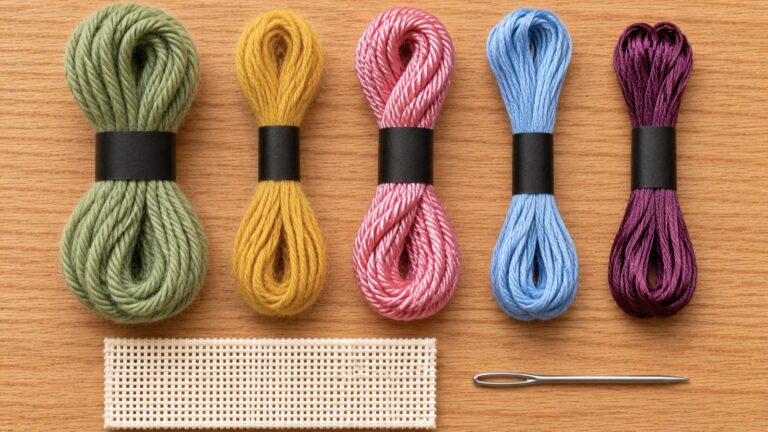
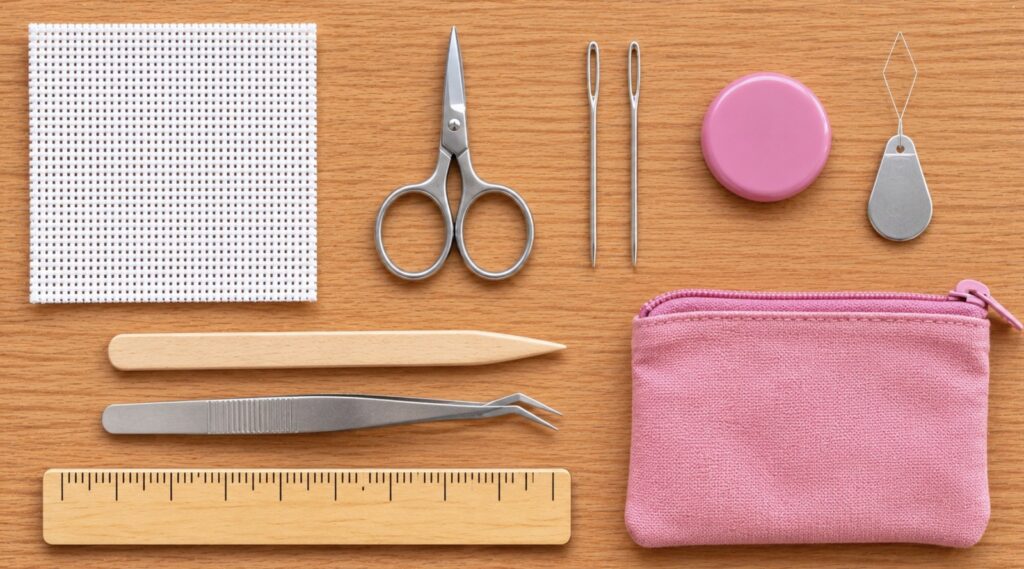
Tapestry needles. A tapestry needle has a blunt, rounded tip and a long eye. The blunt tip slides through the canvas holes without splitting the threads. Match the needle to the canvas: use size 20 on 13 mesh and size 22 on 18 mesh. A higher number means a thinner needle. Needles tarnish with use, and a tarnished needle can mark light thread, so start a new project with a fresh one.
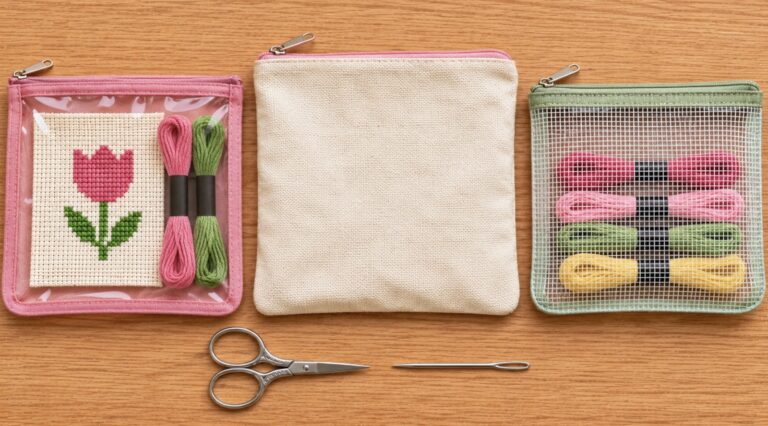
Small, sharp scissors. Use small embroidery scissors, not kitchen scissors. A clean cut makes the thread easier to push through the needle and keeps the back of your work tidy. Keep this pair for thread only, and it stays sharp for years.
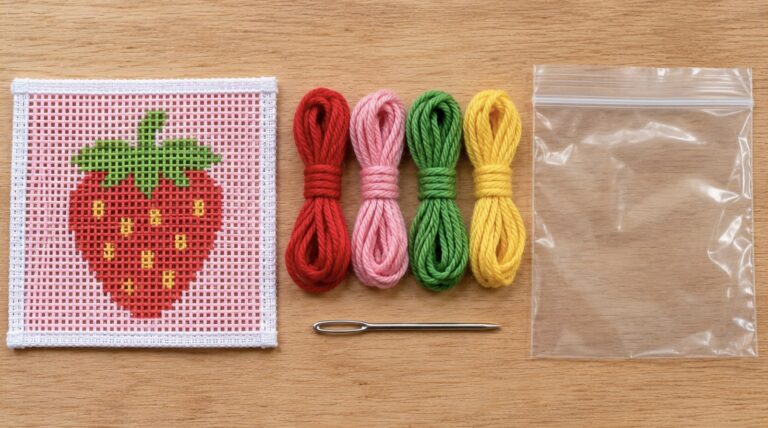
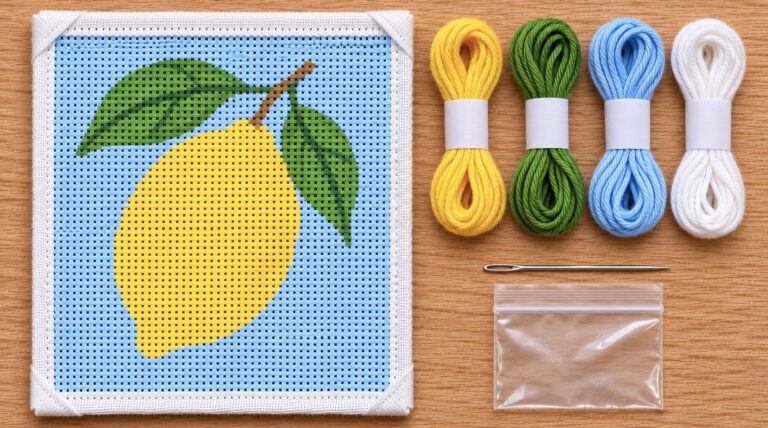
If you bought a kit, check what it includes before you shop. Many kits come with a needle. See what comes in a kitted canvas.
What helps as soon as you can add it
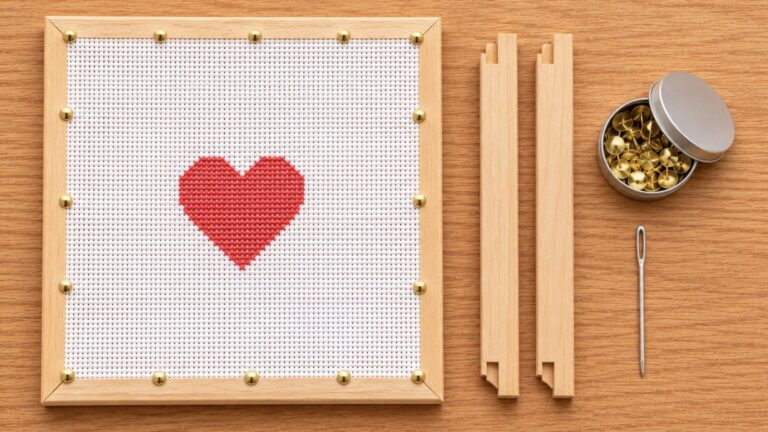
Stretcher bars and tacks. Stretcher bars are flat wooden bars that join into a frame. You tack the canvas to the frame, and it stays tight while you stitch. The bars keep your tension even and stop the canvas from pulling into a slanted shape. They matter most on larger projects and with decorative stitches. Some stitchers prefer to hold a small canvas in the hand, so try both ways.
Needle minder. A needle minder is a small magnet that sits on your canvas and holds the needle when you put the work down. It saves you from hunting for a lost needle in the couch.
Needle threader. A threader pulls the thread through the eye of the needle for you. It helps most with thick wool and with threads that fray at the tip.
What can wait
- Laying tool. A smooth, pointed stick of wood, metal, or glass. You hold it under the thread as you pull a stitch tight, and it keeps flat threads and stranded threads from twisting. You do not need one for regular wool or pearl cotton.
- Seam ripper and tweezers. A seam ripper cuts stitches you want to remove. Work slowly so you do not cut the canvas. Tweezers pull out the cut bits of thread.
- Thread dish. A small dish for snipped thread ends, so they do not end up all over the room.
- Good light. A lamp you can aim at the canvas, or a light you wear around your neck, makes evening stitching far easier on the eyes.
- Notebook. Write down the threads and colors you used, and when you started and finished. You will want those notes if you run out of a color.
- Ruler or tape measure. For measuring the design area before you buy thread or stretcher bars.
- Stitch book. A book of stitch diagrams gives you ideas when you move past tent stitch. Start with our free guide to needlepoint stitches.
- Project bag or pouch. Any zip pouch keeps your needles, scissors, and threads together and clean.
How to avoid buying too much
- Finish one small project with only a needle and scissors. You will learn what annoys you, and that tells you what to buy next.
- Buy stretcher bars to fit your canvas. They come in pairs by length, so measure the canvas first.
- Skip sets of ten gadgets. Most stitchers end up using three or four tools every day.
- Spend on scissors. A good pair is the one tool you touch every few minutes.
New to the craft? Start with how to do needlepoint, then pick your thread with our needlepoint threads guide.