Blank Needlepoint Canvas: Mono, Interlock and Penelope Explained
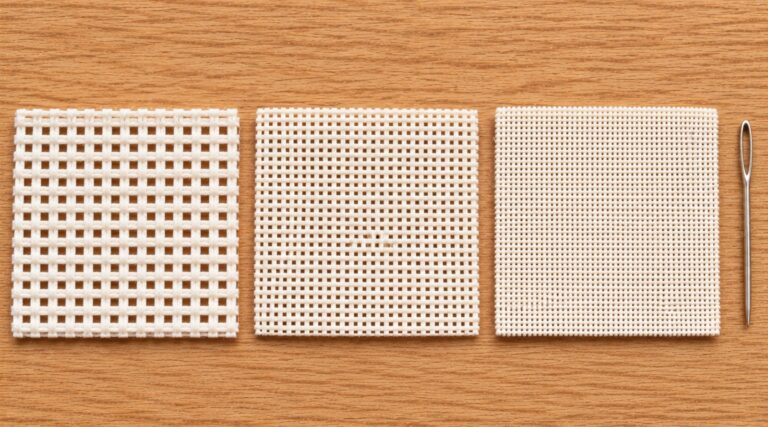
Blank needlepoint canvas is canvas with no design on it. You buy it by the piece or off a roll, then stitch from a chart, draw your own design on it, or practice stitches. It comes in three weaves: mono, interlock, and Penelope. This guide explains the difference and shows you how to cut and prepare a piece.
The three types of blank canvas
| Type | How it is woven | Good to know | Best for |
|---|---|---|---|
| Mono | Single threads in a simple over-and-under weave | Has some give. Works best on a frame. Most hand-painted canvases use it. | Decorative stitches, cushions, most projects |
| Interlock | Two thin threads twist around each crossing thread and lock it in place | Very stable. You can trim it close without fraying. Common in kits. | Beginners, tent stitch, small items such as coasters |
| Penelope (duo) | Pairs of threads in both directions | Stitch over the pairs for big stitches, or split them for small ones | Fine detail next to bold areas, hard-wearing pieces |
Mono canvas
Mono canvas has one thread running each way, woven over and under like a basket. The threads can shift a little, which gives the canvas some stretch. That give suits pieces people sit on or lean against, such as cushions and chair seats. Because it moves, mono canvas holds its shape best on a frame. See needlepoint frames.
Mono is the standard for hand-painted designs and for decorative stitches. It comes in the most mesh sizes: 10, 12, 13, 14, and 18 are common.
Interlock canvas
In interlock canvas, two thin threads twist around each crossing thread and hold it in place. Nothing slides, so the canvas keeps its shape and does not fray when you cut it. Printed designs and kits often use it.
Interlock is the forgiving choice for a first project stitched in tent stitch. It usually comes in white or brown.
Penelope canvas
Penelope canvas, also called duo canvas, uses pairs of threads in both directions. It carries two numbers, such as 10/20. Stitch over the pairs and you get 10 stitches per inch. Push the pairs apart and stitch over single threads, and you get 20 stitches per inch. You can mix both on one piece: small stitches for a face, large ones for the background.
The double threads make it durable. Traditional tapestry kits and pre-worked designs often use it.
Which mesh size?
Mesh is the number of holes per inch. A lower number means bigger stitches and thicker thread. For practice and first projects, 13 or 14 mesh is easy to see and quick to fill. Read the full comparison in needlepoint canvas mesh sizes.
What to look for when you buy
- Even threads. Cheap canvas can have knots and unevenly twisted threads, which weaken it. Good canvas looks smooth and regular.
- Material. Most woven canvas is cotton. Some is linen.
- Color. White is the most common. Use white under pale designs so the canvas does not show through, and brown under dark ones.
- Brand. Zweigart is a long-established maker of cotton canvas, and many stitchers favor it. You can spot it by the thin orange thread woven into the finished edge.
How to cut and prepare blank canvas
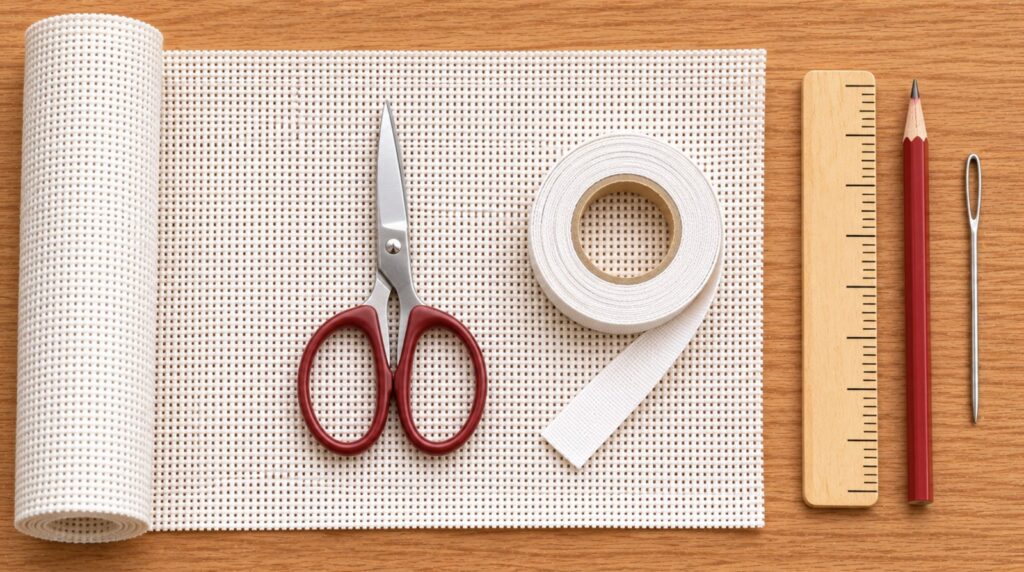
- Work out the size. Take the size of your design and add 2 to 3 inches of bare canvas on every side. You need that margin for a frame and for finishing.
- Mark and cut. Mark the size with a pencil and cut along a line of holes, between two canvas threads, so the edge stays straight.
- Keep the grain straight. If your piece has a finished edge from the roll, keep that edge on the left or right side of your work, not the top or bottom.
- Bind the edges. Fold masking tape or cloth tape over each cut edge, half on the front and half on the back. The tape stops the canvas from unraveling and keeps your thread from snagging on the rough edge.
- Mark the center. Fold the canvas lightly in half both ways, or count the threads, and mark the middle in the margin. Most charts start from the center.
- Mount it. Tack the canvas to stretcher bars if you use them.
What you can do with blank canvas
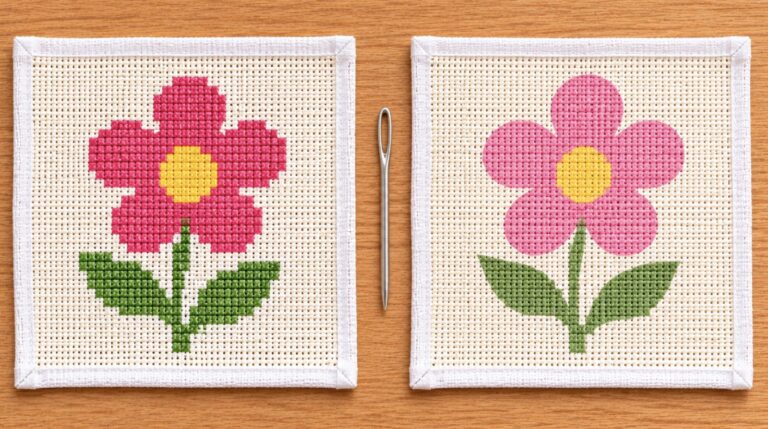
- Stitch from a chart, counting squares the way cross stitchers do. One square on the chart is one tent stitch.
- Draw or paint your own design onto the canvas.
- Make a stitch sampler to practice. Start with our guide to needlepoint stitches.
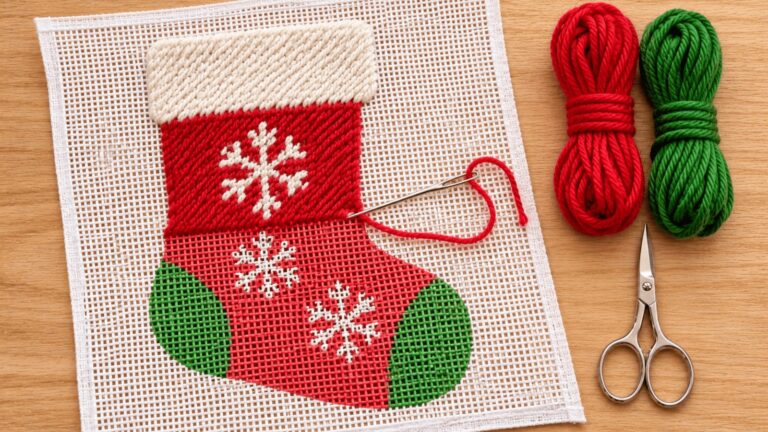
If you would prefer a canvas with the design already on it, see what a kitted canvas includes.